
Calf feeding: Urban Milkshuttle takes the strain
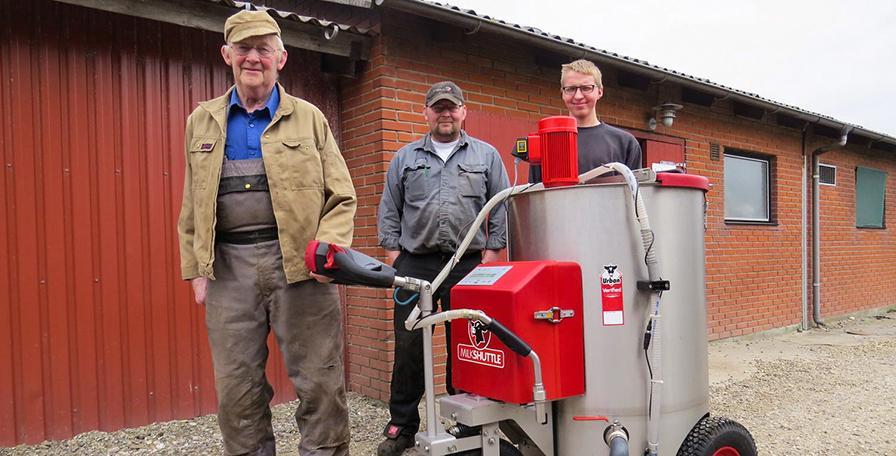
Calf feeding: Urban Milkshuttle takes the strain
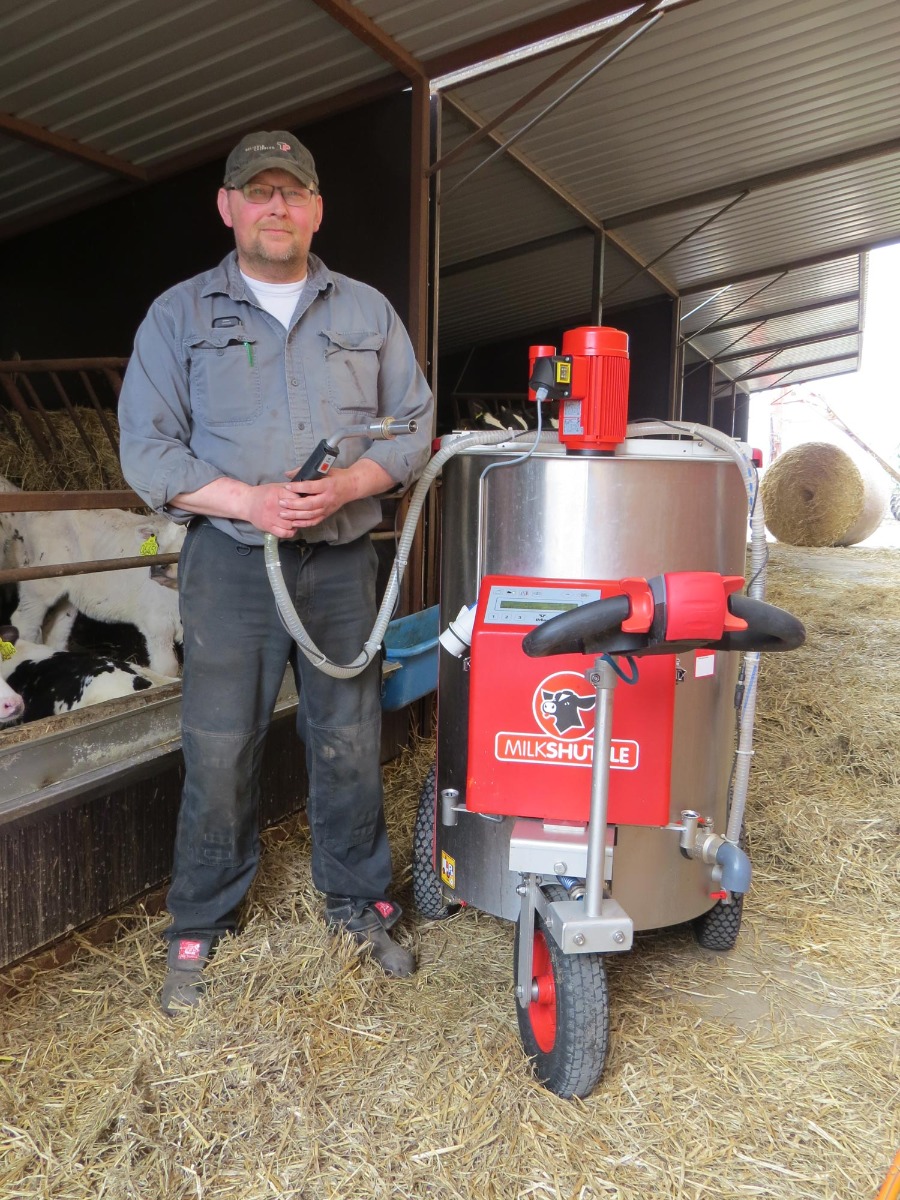
‘A big plus with our Urban Milkshuttle feeding cart is that it ensures the milk replacer is mixed totally consistently, and it keeps it heated to a constant temperature of 40-42 degrees so that the calves don’t get diarrhoea’, says veal calf producer Kim Pedersen.
‘It’s one of the best investments we’ve ever made’.
Kim Pedersen is forthright when the talk turns to the farm’s 250-litre Urban Milkshuttle milk feeding cart, purchased at New Year.
‘We save a lot of heavy lifting compared to when we were bucket-feeding. The feeding cart takes a lot of physical strain off us all round, every single day’, says Kim.
He runs Lergrav Farm near Bøvlingbjerg in north-west Jutland together with his father, Holger Pedersen and his son Mads Pedersen, who is a permanent employee on the farm.
Dairy cows out, veal calves in
Lergrav has operated with 120 dairy cows for many years. The herd is being wound down, though, and right now there are 44 dairy cows left. Veal calf production is being established instead. The first 200 calves have been bought, and the plan is to reach an annual veal calf production of about 400 head.
‘We buy calves at the age of 2 to 4 weeks from three herds that we collect them from ourselves. The calves are fed on milk until they are a couple of months old’, says Kim Pedersen, and goes on:
‘A big plus with the Urban Milkshuttle feeding cart is that it ensures the milk replacer is mixed totally consistently. We have set the machine to stir the milk replacer for 20 seconds each minute, so it is fully stirred and ready to be dispensed.’
Constant temperature prevents diarrhoea
Equally important is the way the feeding cart keeps the milk replacer heated to a constant temperature of 40-42 degrees. The result is that the calves have healthy stomachs with good digestion – without diarrhoea. Because milk replacer that’s either too hot or too cold causes diarrhoea in calves’, observes the north-west Jutland-based farmer.
The Urban Milkshuttle plugs into an electrical outlet and has its own heating. Kim Pedersen underlines another clear advantage of the machine, namely that the milk mixture doesn’t burn on at the bottom, because the electric heating element is in water.
‘One practical detail is that the machine can be set to dispense in three different, configurable quantities, depending on how many calves are to be fed at a time. Each time you want to dispense, you just press a button on the milk gun’, he says.
Self-driving on two wheels
As for the feeding cart lightening the load physically, it doesn’t hurt that it drives itself on two wheels. That means we needn’t exert ourselves at all hauling it around, wherever we go with it’, says the newly established veal calf producer.
The battery it runs on charges up each time the milk replacer is mixed and the machine is plugged into an outlet.
‘The Milkshuttle is fitted with heavy, solid tyres that can’t get punctures. The extra weight makes the milk feeding cart run more stably’, Kim Pedersen explains.
Milk is fed twice a day, and a new portion is made up each time. It takes about 10 minutes to mix a portion, and it takes about 20 minutes each time to feed the 56 calves that are having milk at the moment.
Quick and easy to clean
When feeding is complete, the machine is flushed clean with hot water, which is the work of a moment. Once a week, a five-minute wash programme is run with cleaning fluid.
‘We are really happy with our Urban Milkshuttle, partly because it has proven to be very reliable’, says Kim Pedersen.
One reason why we chose this particular machine and not a different make is that this one has the reputation of being more advanced and working better’, he adds. For various reasons, there has so far been no generational change at Lergrav, so the farm is still in Holger Pedersen’s name.
Three generations
Although 81 years old, Holger Pedersen still takes part in day-to-day work together with his son Kim Pedersen, 46, and his grandson Mads Pedersen, 20.
Holger Pedersen took over Lergrav in 1971 with 15 hectares of land. In the intervening years, he has bought a further 50 hectares and built all the present-day farm buildings.
In addition to the dairy production, which is being wound down, and the veal calf production, which is in its start-up phase, a small machine pool is also run from the premises. Its activities include manure spreading, ploughing, sowing, pasture management and straw baling
.
Login
Register