
Where the milking clusters are flushed after each cow
Where the milking clusters are flushed after each cow
A big Funen-based dairy producer has chosen a 2x32 DairyMaster swing-over milking plant for its robustness and high capacity. The plant’s ClusterCleanse flushing system flushes the milking clusters after each cow.
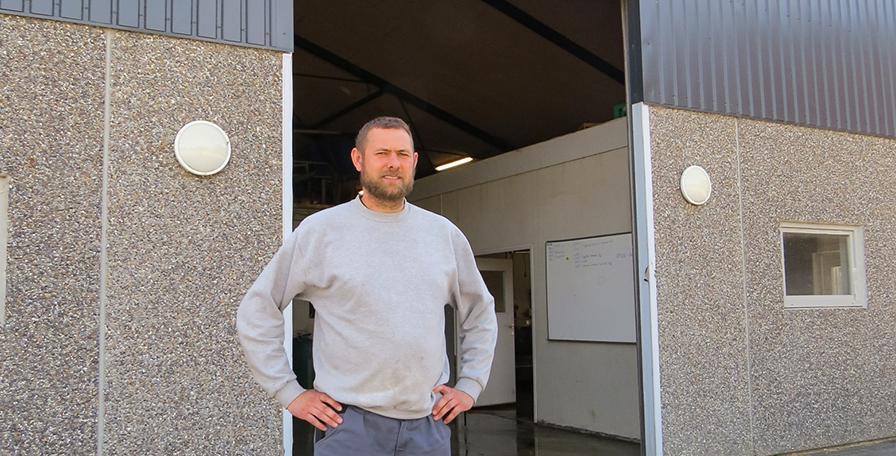
‘The capacity is really good, and the equipment is very robust, so it’s well suited to many hours of milking’. That’s how Christian Stenskrog of Grambogård Farm near Tommerup on Funen describes his 2x32 DairyMaster swing-over milking plant from Dairy Systems Danmark ApS, which he commissioned in December 2015.
The Funen-based dairyman had the milking plant fitted with DairyMaster's ClusterCleanse system, which flushes and disinfects the milking clusters after each cow.
Christian Stenskrog chose to invest in the new plant when he was looking at a major expansion of his herd from the 300 large-breed dairy cows he had then. There are now 500 cows at Grambogård, and the target is 550 once the herd expansion is complete.
Simpler to have a milking parlour
‘Before I started expanding the herd, we had robot milking. It worked well enough, I suppose. But, if we’re moving up to 550 cows, I prefer a milking parlour, because it is simpler’, says Christian Stenskrog.
‘Before making my mind up, I went to see three DairyMaster milking parlours and actually joined in the milking at one of the places. That convinced me’, he says, adding:
‘The swing-over system attracted me, too. For one thing, because the technology is positioned above head height, where it is dry and doesn’t get washed every day.’
‘The milking clusters are relatively heavy, but still easy to handle when you use the right procedure. In fact, the slightly heavier clusters give a shorter milking time, so tough milkers don’t need to be replaced’, he says.
Three milkings
Milking is done three times a day at Grambogård, and it takes around 3 hours each time to milk the 430 or so dairy cows currently in the herd with 32 milking clusters – including start-up and cleaning.
Christian Stenskrog opted to have the DairyMaster milking plant fitted with the ClusterCleanse flushing system, as a lot of cows were to be bought from various herds for the expansion.
‘When you expand by adding a lot of bought-in cows, there’s inevitably a risk of bringing in infection, which can cause udder inflammation and streptococcal infections’, he notes.
Fine udder health
‘We haven’t had those problems at all. I think the ClusterCleanse flushing system, which flushes and disinfects the milking clusters after each cow, may have helped there’, says the Funen-based dairyman.
Udder health is fine. We have no trouble keeping the cell count below 200,000, even though we still have a low replacement rate and hence a relatively large number of older cows until we finish expanding the herd’, he continues.
Further evidence of the herd’s good udder health is the fact that there are only 0.23 treatments for udder conditions per cow-year, which is very low compared with the national average. Milk yield in the herd is about 11,000 kg ECM per cow-year.
A practical detail
‘A practical detail with the ClusterCleanse flushing system is that, if a cow kicks the machine off during milking, so that dirt gets sucked up, no harm is done. You see, the cluster is automatically flushed clean before milking continues’, Christian Stenskrog explains.
‘I also opted to have the milking parlour equipped with automatic concentrate feeders. I did this partly to get the cows into the parlour more quickly, partly so that I could allocate a little extra feed concentrate to the high-yielding cows’, he says.
Christian Stenskrog spends around DKK 100,000 per year on maintenance of the milking system – including the mandatory service.
Login
Register